

Dan invites Dr. Bailey McAlister, sommelier, Rhetoric & Communications professor, & pop-culture critic to talk all about how she merges her love of wine and the wine community with her PhD research, the impact that 2020 had on the wine & beverage industry, how sommeliers are using personal narratives to introduce people to wine, community building in the world of wine, how she teaches process-oriented writing to her students, and so much more. So, grab a glass, your favorite beverage, and settle in for another Writing Remix!
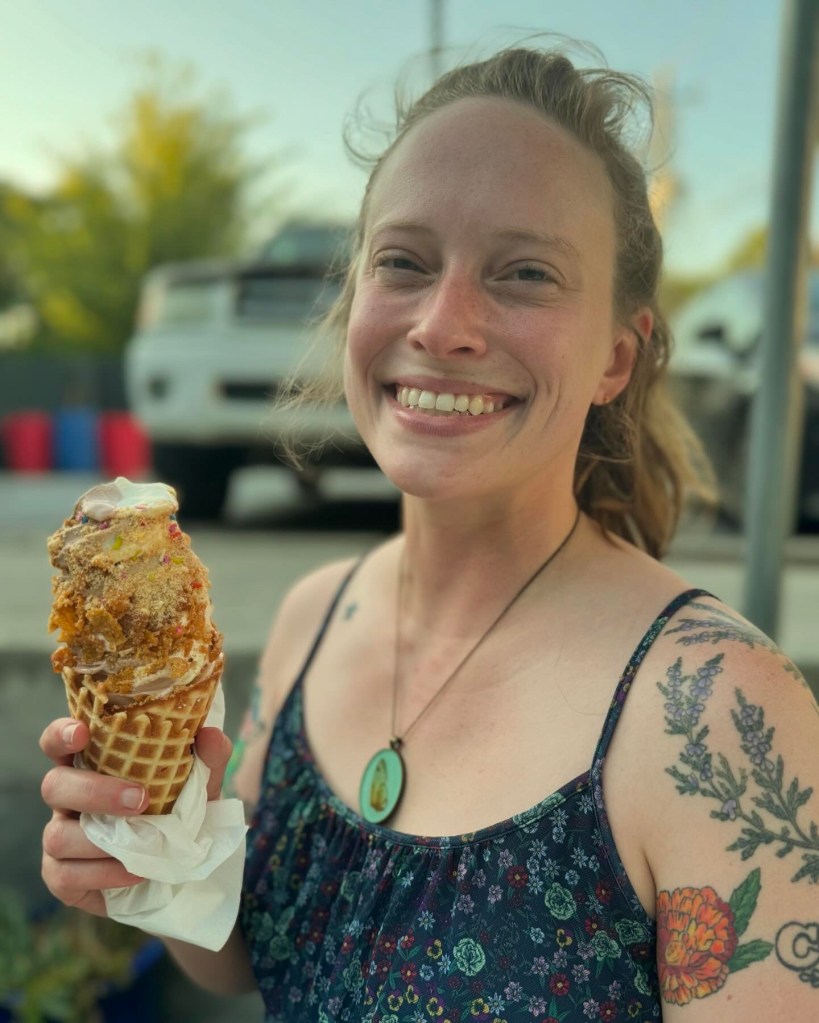
Bailey has been an educator and researcher in the field of Rhetoric & Communication for almost a decade. She holds endless curiosity for unconventional, alternative, and radical frameworks of thought, especially in regards to the ever-evolving world of communication. Her background in food and wine rhetorics helps inform her experimental teaching strategies and community-engaged research goals. Bailey is currently teaching and researching at Northeastern University in Boston.
People and Texts Mentioned in the Episode
- Sommelier
- The Wort (Podcast)
- Lithology Brewing Co.
- A Cork in The Road
- Dr. Regina Duthley
- Embodying Your Digital Self w/ Dr. Regina Duthely
- Paste (Magazine)
- “Feelin’ Great: Wines for Celebrating 19 Years of Outkast’s Speakerboxxx/The Love Below” by: Bailey McAlister
“2020 caused a lot of changes in the wine industry, not just The COVID pandemic, but all of the other things that happened to be going on that year, environmentally and politically.” -Bailey McAlister
Tweet
“There’s so many new things that people are doing in wine and it’s all rhetorical.” -Bailey McAlister
Tweet
“What I like to tell my students is you might not spend a lot of time trying to persuade people, but other people are going to spend a lot of time trying to persuade you.” -Bailey McAlister
Tweet
“We don’t have to just sell [wine that] is traditionally ‘good’ in order to be rhetorically effective. We can actually change the standards of taste ourselves if we want to by using rhetoric to persuade somebody to want a particular bottle or brand. I feel like what I’ve been looking at so far [in] my research is people are doing that through [using] their own narratives.” -Bailey McAlister
Tweet
The pandemic had such a huge effect on food and drink and dining culture in general […] There was also a lot of environmental disasters in 2020, and any kind of wildfires on the West Coast is always going to affect the vintage […] Then 2020 was also kind of a big deal politically, especially in wine. A lot of people had kind of come out in the news explaining racism in the industry […] sexism and sexual harassment in the industry that really needed to be brought into the light. So, it was like all of these things that kind of happened at once that made almost everybody kind of say, what is this shift that’s happening.” -Bailey McAlister
Tweet
“How to make Gen Z interested in wine is like the big, bold question. Everybody’s brand is talking about, and it has little to do with some of the stuff in the past, like marketing wine as a luxury brand. That’s not really going to work. Marketing wine as something that’s like really elaborate, that would take a lot of time to understand and get into isn’t really going to work with this. So it’s like thinking of new ways, like visual rhetoric, personal narratives, authenticity, building ethos with these kind of new communities.” -Bailey McAlister
Tweet
“You’ll go to someplace like Italy or Croatia or Greece or Georgia. There’ll be places where a lot of times families just make wine not necessarily to sell some kind of a luxury brand or to sell any kind of brand at all. It’s more so just kind of like a hobby that people do because it’s a part of the culture.” -Bailey McAlister
Tweet
“When I was going into my PhD, I didn’t really know what research I wanted to focus on. I was kind of bored of the research I was doing as a Master student, so I wanted to research a community that I could be engaged with […] and do like community engagement/rhetorical practices type things. But I also want it to be something that I wouldn’t get burnt out after five years.” -Bailey McAlister
Tweet
“I think that in doing this extended research on wine communication, hopefully it opens it up for other people to explore the rhetorical lens of other food and drink industries to really think about these different roles and how these people are changing cultural tastes for everybody.” -Bailey McAlister
Tweet
“[The] main thing that I’ve been doing is just kind of showing students about the process of research. So I’m trying to think of everything as a process, wine as a process, research as a process, writing as a process so that they can think about which things they can take for later and how they can engage with their community” -Bailey McAlister
Tweet
Episode 105 Transcript
The transcript for this episode is not corrected
The theme song is “4 am” by Makaih Beats. You can follow the podcast on Apple Podcasts, Spotify, and Stitcher, join the newsletter for a bunch of extras (a Note From Dan, episode-specific writing prompts, and book recommendations, & follow us on Twitter @WritingRemixPod & Instagram @WritingRemixPod.
 Writing Remix Podcast