
Dan welcomes Dr. Meghan P. Nolan back to Writing Remix to discuss preparing for the Spring 2025 semester and some of the ways she’s looking to expand, shift, and reimagine approaches to writing instruction. Meghan also talks about the balance between her duties as a writing professor and the Chair of the Sam Draper Honors Program at SUNY Rockland, the impact of AI on students’ critical thinking, setting boundaries for work life balance, the role of flexibility, adaptability, and organic assignment development, advice for new professors, and so much more. This is a perfect episode if you’re a new instructor, a seasoned instructor looking for some inspiration, or a fledging doctoral student wondering what the academic life consists of after th dissertation.
Approximate Show Notes
00:00 Introduction and Guest Welcome
00:35 Reflecting on St. John’s and Doctoral Program
01:19 Beginning of the Spring 2025 Semester
01:55 Megan’s Role and Experience at SUNY Rockland
03:48 Balancing Administrative and Faculty Responsibilities
06:17 Classroom Preparation and Flexibility
07:20 Course Materials and Student Engagement
14:09 Setting Boundaries and Communication
20:40 Navigating AI in Academia
29:54 Empowering Students to Embrace Mistakes
30:24 The Pressure of Academic Perfection
35:01 Redefining Humanities Education
40:35 Innovative Teaching Methods
45:06 Navigating AI in Education
47:08 Encouraging Student Curiosity
53:16 Advice for New Professors
56:00 Conclusion and Future Plans
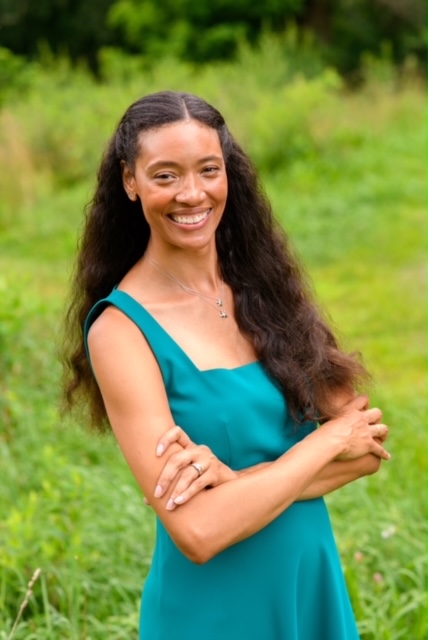
Meghan P. Nolan, MFA, MA, PhD, is an Associate Professor of English and Chair of the Honors program at State University of New York, Rockland. She is a recipient of the SUNY Chancellor’s Award for Excellence in Teaching. She is a multigenre writer, who focuses on (Neo-)Victorian and Modern literature/ crime writing and fragmented perceptions of self-hood through academic works, fiction, non-fiction, and poetry. Her book The Crossroads of Crime Writing: Unseen Structures and Uncertain Spaces was published by Anthem Press (March 2024). She is the author of the poetry collection, Stratification (2008) and her poems have been in many literary journals over the years. Recently, her works have been on public display as a part of the “Writing on the Walls” exhibits at the Hudson Valley Museum of Contemporary Art (HVMOCA) and she regularly performs her poetry and monologues as a part of productions by both Studio Theater in Exile and Tutti Bravi respectively. Her academic works have appeared in Approaches to Teaching the Works of Fernando Pessoa (2025), Mean Streets (2021), Persona Studies (2021 and 2015), Transnational Crime Fiction: Mobility, Borders, and Detection (2020), Exquisite Corpse: Studio Art-Based Writing in the Academy (2019), The 100 Greatest Detectives (2018), and Thread (2017). For more info visit mpnolan.com.
People, Texts & Podcasts Mentioned in the Episode
- Dr. Meghan P. Nolan
- SUNY Rockland Community College
- Sam Draper Honors Program SUNY Rockland
- St. John’s University
- All About Love by bell hooks
- All They Will Call You by Tim Z. Hernandez
- Pedagogy of the Oppressed by Paulo Freire
- Exile and Pride: Disability, Queerness, and Liberation by Eli Clare
- ChatGPT
- Idiocracy (Movie 2006)
- Wikipedia
- Dr. Carmen Kynard
- “When Robots Come Home to Roost: The Differing Fates of Black Language, Hyper-Standardization, and White Robotic School Writing (Yes, ChatGPT and His AI Cousins)” by Dr. Carmen Kynard
- Naropa University
- Bhanu Kapil
- Grammarly Pro
- Jack Kerouac
- William S. Burroughs
- Hunter S. Thompson
- Dr. Granville Ganter
- On the Road by Jack Kerouac
I’ve learned to sort of trust my instincts a lot more as a professor and […] I don’t feel the need to overly plan my lessons because I found that they’re a lot better when they’re more organic because a lot of times it’s based on what those students are saying in the classroom.”
-Dr. Meghan P. Nolan
-Dr. Meghan P. Nolan
“It’s not about the assignments. It’s about what those students need to learn in that particular group, and sometimes you have to adjust things.”
-Dr. Meghan P. Nolan
“ There are so many things sort of missing from our pedagogical rearing […] like the administrative part of our jobs that a lot of us sort of take on […] and that’s never discussed and we don’t know what to expect from that […] and I think that that facilitates those boundaries being blurred even further […] It’s kind of weird that we don’t address it.”
-Dr. Meghan P. Nolan
“ There […] are these two factions on campus […] there are these people who think it’s okay to use AI and they encourage their students to use it for their writing, and I find that that’s problematic for a lot of reasons because, like you, as a writer and an English professor I take umbrage to that […] If we teach students to rely upon those things too much, then we’re heading towards Idiocracy for real. That movie becomes very real […] if we don’t know how to think critically for ourselves.”
-Dr. Meghan P. Nolan
“ The English department [at SUNY Rockland], we took a very hard line on [AI usage]. We actually met as a department and came up with a policy. So regardless of the RCC policy, where it says […] it’s not allowed either, but I think there’s like more wiggle room in theirs, we said absolutely not […] I know all of my colleagues in the English department agree there. We didn’t have anybody within the department who felt otherwise.”
-Dr. Meghan P. Nolan
“You need very responsible teaching and very deep understanding of AI in order to do that kind of teaching of how to use AI.”
-Dr. Meghan P. Nolan
-Dr. Meghan P. Nolan
“ I see […] the honor students […] freak out if their GPA goes down like one point, or if a professor gave them like a half a letter grade different than what they felt they deserved. So there are a couple of things sort of happening there. Number one, it’s something that we didn’t deal with when we were younger, where there’s this constant questioning or pressure on the professor to do what they want us to do. There’s that part. But I think there’s that pressure [which] comes from the formative education arena when they’re coming into college […] I find myself saying to students all the time, ‘you do know that that number doesn’t define you, right? That one point isn’t going to change who you are?’”
“ We have a running issue in one of our science lab classes where everybody, I’m not even kidding you, everybody who uses AI to answer this particular prompt that they give every semester comes up with the same generic story about their grandmother: ‘Their grandmother used to smoke and it doesn’t anymore.’ So now we know.”
-Dr. Meghan P. Nolan
“ Maybe we do a terrible job as a society of getting people to understand that whatever you’re studying in college [is] not the end all be all. You’re not married to that for the rest of your life. Things change. I always try to tell students like, look, I worked in technology for a long time before I even became a college professor […] I feel like they think they have to make a decision and they have to stick to it and that’s why they’re paralyzed […] afraid to make a decision one way or another. And I feel like students are like that with their writing too.”
-Dr. Meghan P. Nolan
“ You have to trust. You have to kind of like let things go, and you can’t force things. I think that’s the hardest thing to teach students. You can’t force something because the harder you try to force it the further off it is […] You’re blocking yourself and that’s true of creative writing, of academic writing, of any kind of writing.”
-Dr. Meghan P. Nolan
Ep. 107 Transcript
The theme song is “4 am” by Makaih Beats. You can follow the podcast on Apple Podcasts, Spotify, and Stitcher, join the newsletter for a bunch of extras (a Note From Dan, episode-specific writing prompts, and book recommendations, & follow us on Instagram @WritingRemixPod.
 Writing Remix Podcast