

Dan welcomed his colleagues in the USC Writing Program Dr. Leah Pate, Dr. Tamara Black, & Dr. Rory Lukins to do a deep dive into their project “Reimagining Assessments: Contract Grading’s Untapped Benefits for Learning, Teaching, and Well-Being.” This conversation covers the results of their research and the impact contract grading has on student writing and motivation, the shift from product driven writing to meaningful writing, how contract grading helps to highlight the emotional toll of grading on faculty and the emotional toll of writing for the students, the challenges and ethical considerations associated with grading contracts, adjustments made for upper versus lower division students, the inclusion of DEIB (Diversity, Equity, Inclusion, & Belonging) principles, and so much more. Get ready to take notes and definitely post your opinions and questions, in the comments.
Approximate Show Notes
00:00 Introduction to Writing Remix and Guests
00:49 Introducing the Concept of Contract Grading
01:48 Faculty Experiences and Initial Reactions
04:06 The Evolution and Implementation of Contract Grading
07:53 Student Perspectives on Grading Contracts
10:13 Comparing Contract Grading with Traditional Grading
14:21 Faculty and Student Feedback on Contract Grading
20:03 Challenges and Adjustments in Contract Grading
40:45 Grading Contracts and Student Motivation
41:34 Challenges Faced by Instructors During COVID
42:53 Bias and Judgment in Grading
43:40 Impact on Non-Traditional Students
44:00 Critiques of Labor-Based Grading
47:00 Faculty Mental Health and Emotional Labor
53:58 Equity Benefits of Grading Contracts
57:01 Adoption and Adaptation of Grading Contracts
01:05:49 AI and the Future of Grading
01:14:34 Next Steps and Future Directions
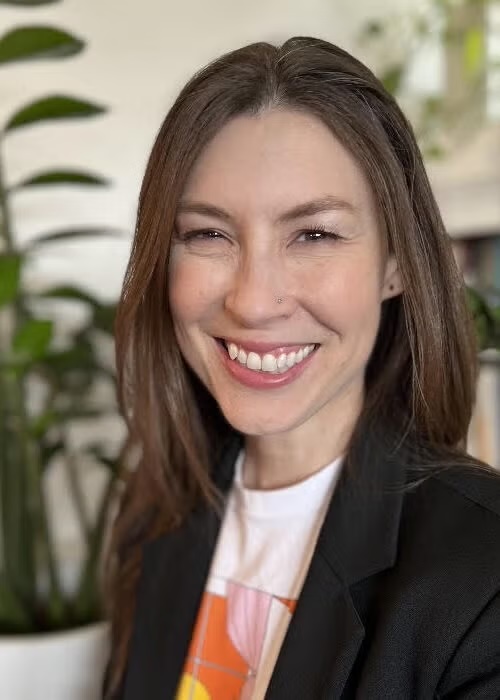
Dr. Tamara Luqué Black is an Associate Professor (Teaching) of Writing within the USC Writing Program. She specializes in working with upper-division students in the social sciences and created the course “Advanced Writing for Economics,” which has been offered continuously since it debuted in 2018. Like her teaching, Tamara’s research and service activities emphasize pedagogy and student support. Her research focuses on grading contracts, rhetorical empathy, and wellbeing, and she enjoys coaching Fulbright Grant and Marshall Scholarship applicants through USC Academic Honors & Fellowships and serving on the Writing Program’s Upper Division Curriculum Committee. Her new book, Humane Composition Pedagogy, co-authored with Amber Foster, will be published by Palgrave Macmillan this year. Tamara lives in South Los Angeles with her husband. She loves animals, hiking, music, and true crime.

Dr. Leah Pate is an Associate Professor (Teaching) in the University of Southern California’s Writing Program, where she has taught since 2013. She teaches a variety of lower- and upper-division writing courses on topics ranging from aesthetics to engineering to international economics, as well as a graduate seminar on writing pedagogy.
Leah’s research largely focuses on issues pertaining to faculty emotional labor and well-being; along with Dr. Tamara Black and Dr. Rory Lukins, she is the co-author of the forthcoming manuscript Re-Imagining Assessment: Contract Grading’s Untapped Benefits on Learning, Teaching, and Wellbeing. Leah’s passion for supporting faculty is reflected in her role as the longstanding chair of the Program’s Mentoring Committee, which administers a robust, multi-tiered, and widely recognized support program for faculty in different stages of their careers; her position training and advising graduate students and new faculty as they begin their teaching careers at USC; and her elected
appointment to the Dornsife Faculty Council, where she serves on the Part-Time and Research, Teaching, Practitioner, and Clinical Track Caucus.
Leah currently lives in Marina Del Rey with a pack of rescue dogs. An avid endurance athlete, she recently competed at the 2024 Ironman World Championship in Nice, France.
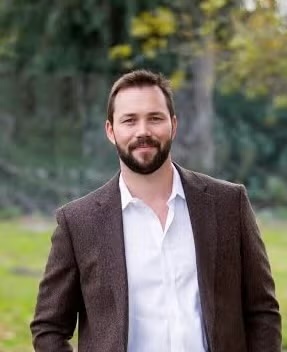
Rory Lukins is a Lecturer at USC’s Writing Program, where he teaches courses in writing and critical thinking. He received his Ph.D. in English from USC, and he has taught courses in writing, literature, and critical theory at several universities in the Los Angeles area.
People, Texts & Podcasts Mentioned in the Episode
- Dr. Leah Pate
- Dr. Rory Lukins
- Dr. Tamara Black
- USC Writing Program
- Dr. Jeff Chisum
- Dr. Asao Inoue
- Dr. Inoue speech at 2019 CCCC
- Dr. Sarah Mesle
- Dr. Dave Tomkins
- Dr. Jesse Stommel
- Dr. Joyce Inman
- Dr. Rebeca Powell
- Dr. Peter Elbow
- Dr. Ellen Carrillo
- OSAS (Office of Student Accommodation Services)
- PAMLA (Pacific Ancient and Modern Language Association)
- Dr. Brent Chappelow
- ChatGPT
- All They Will Call You by Tim Z. Hernandez
- Naropa University
- Dr. Carmen Kynard
“A grading contract asks students to complete a certain amount of labor in exchange for a certain guaranteed grade and it really shifts the sort of emphasis in terms of how we assess student work, on their commitment, their engagement, their labor, in order to address various inequities”
-Dr. Leah Pate
”We didn’t come into this project with the goal of asserting that grading contracts are better than other modes of assessment. We just wanted to see how they were working in our department and just sort of figure out to the extent that they are working [and] how can we make them even better?”
-Dr. Tamara Black
“There is a big movement for this kind of labor-based scheme of assessment […] I think there’s a growing movement just to kind of try to get rid of grades on college campuses entirely.”
-Dr. Rory Lukins
“Whenever we let students play with AI, we also open up chances for them to notice the limits and flaws of AI.”
-Dr. Tamara Black
“I think what we’ve found is that this contract kind of opens up the space for students to make mistakes […] I think that’s […] not just in terms of how they organize their time, but they try something on an essay and [if] it doesn’t quite go well it’s just a misfire […] this model is a bit more open to that reality”
-Dr. Rory Lukins
“One of the interesting tensions with our data is in respect to the faculty experience […] not having to assign a grade is by far and away the thing that […] faculty found to be the most beneficial, what they liked the best about the grading. This comes up over and again in the data […] the most salient point is what they like the most is that they did not have to justify a grade.”
-Dr. Leah Pate
“You kind of take that notion of judgment out and then suddenly your feedback becomes, what we call formative. It’s forward thinking. It’s [more] like, ‘Next time let’s try this’ rather than, ‘You know, I really saw your thesis weak for these reasons and therefore it’s a B minus.’ You don’t have to highlight that.”
-Dr. Rory Lukins
“It really reduced stress. It improved instructors’ experiences of teaching the class. It reduced their own anxiety about giving feedback. So, it really had notable, both in the quantitative and qualitative data, experiences of reducing emotional labor, so not time, but the emotional labor.”
-Dr. Leah Pate
“The field of composition […] is certainly the most disproportionately exploited labor force in academia”
-Dr. Leah Pate
Ep. 109 Transcript
The theme song is “4 am” by Makaih Beats. You can follow the podcast on Apple Podcasts, Spotify, and Stitcher, join the newsletter for a bunch of extras (a Note From Dan, episode-specific writing prompts, and book recommendations, & follow us on Instagram @WritingRemixPod.
 Writing Remix Podcast