
Dan Dissinger welcomes back his former professor Dr. Steve Mentz, chair of the Saint John’s University English Department, to discuss his latest book of poems Sailing Without Ahab and the Blue Humanities. They dive into (no pun intended) Dr. Mentz’s writing journey in and out of the poems in Sailing Without Ahab, the interconnected writing process and relationship between the creative space of poetry and academic scholarship when it came to creating Sailing Without Ahab, his personal and scholastic history with water, teaching Moby-Dick, and the challenges of writing in the voice of Ishmael. Steve also reads several poems from Sailing Without Ahab and discusses some of the more intricate details about these pieces.
This is such a rich episode both for writers and scholars alike, and being on the precipice of National Poetry Month, this is a great way to start it off.
Approximate Show Notes
00:00 Introduction and Guest Welcome
01:58 Guest Background and Academic Interests
03:38 Exploring the Blue Humanities
06:31 Personal Connections to Water
07:38 Creative and Scholarly Writing
24:23 Teaching and Engaging with Moby Dick
32:20 Exploring Kerouac’s Sense of Home
33:22 Connections Between Moby Dick and The Sea is My Brother
35:18 Writing in Ishmael’s Voice
37:10 The Physicality of Labor in Literature
38:51 Poetic Forms and Inspirations
41:40 Emily Dickinson’s Sea Poetry
42:45 Writing During the Pandemic
44:44 Reading and Discussing Poems
47:23 The Relationship Between Humans and Whales
53:58 Collaborative Projects and Future Works
56:50 Conclusion and Final Thoughts
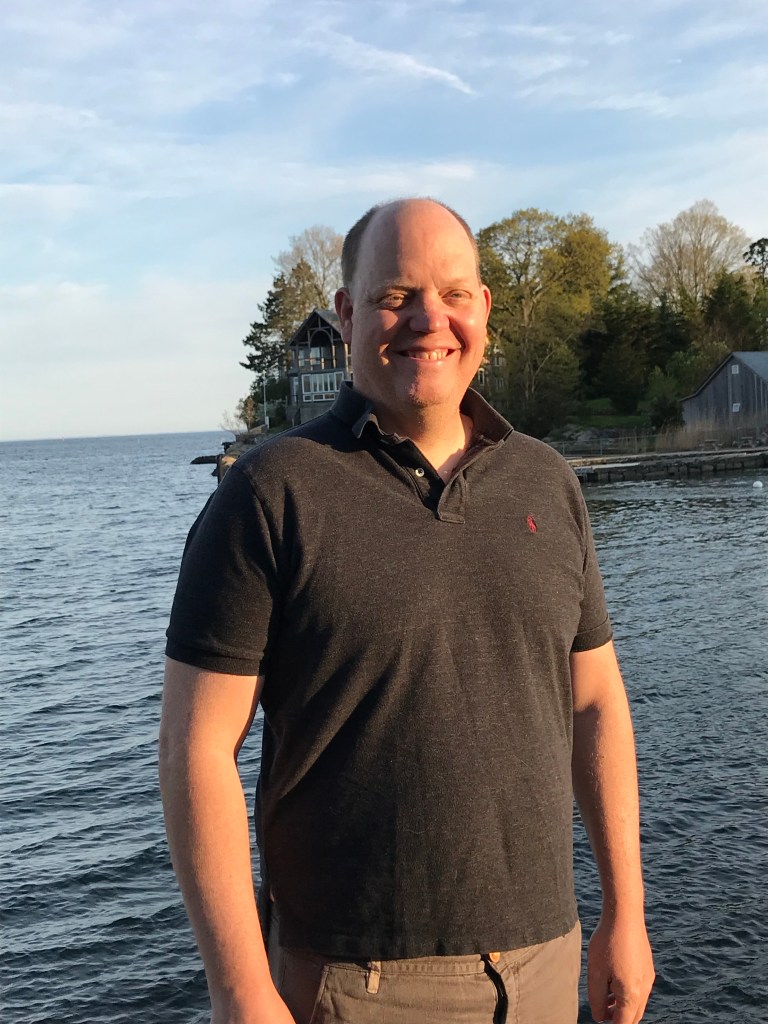
Steve Mentz is a writer, teacher, and open-water swimmer who lives on the Connecticut Shoreline. His book of poems, Sailing without Ahab: Ecopoetics Travels, is available from Fordham University Press. His poetry chapbook, Swim Poems, was published by Ghostbird Press in 2022. His poems have appeared in the Watchung Review, Belfield Literary Review, Blood & Bourbon, Grand Little Things, Adelaide Literary Magazine, The Glasgow Review of Books, and Underwater New York. His public humanities essays have appeared in Public Books, Arcade, Springs, Psyche, Correspondences, and elsewhere. He has published numerous academic books and collections of essays, most recently An Introduction to the Blue Humanities (2023) and the collection A Cultural History of the Sea in the Early Modern Era (2021). He teaches at St. John’s University in Queens, NY.
Social Media:
Facebook: Steve Mentz
X/twitter: @stevermentz
Instagram: @smentz
Blue Sky: @stevementz.bsky.social
SJU Social:
X/twitter: @sju_english
Instagram: @english_sju
People, Texts & Podcasts Mentioned in the Episode
- Dr. Steve Mentz
- Saint John’s University
- Moby-Dick by Herman Melville
- Sailing Without Ahab by Steve Mentz
- Into the Blue: Intro to the Blue Humanities
- Oceanic, New York by Steve Mentz
- The Blue Humanities
- 72. Life After the Ph.D. w/ Dr. Steven Mentz, Dr. Meghan P. Nolan, Dr. Melissa Rampelli, & Dr. Daniel Dissinger
- 19. Embracing a Messy Identity w/ Meghan P. Nolan
- 63. Expanding the Victorian Conversation w/ Dr. Melissa Rampelli
- 107. Preparing for Spring 2025 w/ Dr. Meghan P. Nolan
- 3. Writing During a Pandemic w/ Danielle Lee
- 13. Using Our Voice & Our Hearts w/ Stephanie Renée Payne, Danielle Lee, & O Tomas Bell
- 90. Reacting to Roe v Wade Overturn w/ Stephanie Renée Payne, Danielle Lee, Leah Rubinsky, & Julia Reade
- 108. Exploring Civility, Discourse, & Hope w/ Dr. Danielle Lee
- The Big Read Podcast
- Jack Kerouac
- The Sea is my Brother by Jack Kerouac
- Charles Olson
- “Projective Verse” by Charles Olson
- William Shakespeare
- Emily Dickinson
- Poet in New York by Federico García Lorca
- The Nostalgia Test Podcast
- Free Willy (Movie 1993)
- Whitman, Alabama Poetry Project
- Moby-Dick Big Read
“Water is, of course, one of the relatively few substances that we engage with in all three of its physical states, liquid, solid, and gas. And […] there’s all sorts of ways in which this substance is sort of fascinating to us on a physical and cultural level.”
-Dr. Steve Mentz
“I think the secret history of all scholarship is some kind of personal obsession.”
-Dr. Steve Mentz
“I do think a lot about the experience of being an open water swimmer and how that helps me understand sort of physically the relationship between my relatively small body and the body of the ocean, which is […] down the street from me in Long Island Sound […] The various kinds of relationships we have with water are the things that are really making me think about the kind of work that I’m doing now and that I wanna do in the future.”
-Dr. Steve Mentz
“Ahab is really a book of poems […] it’s also a reading of Moby-Dick, or a kind of distort[ed] misreading, I guess, of Moby-Dick […] Those things are happening at the same time and really in dialogue with each other and I think that the interest in experience, in having my own physical experience of encountering water be part of the thing that I’m thinking about […] leads directly, at least for me, to the creative work […] It is through writing poems, as well as crafting arguments and doing scholarly research and going to the archive, [they] are contributing to sort of getting our heads around and our language around this slippery object, which is planetary water.”
-Dr. Steve Mentz
“I was thinking how can I craft something that will enable me to respond to this particular book? And I was thinking for a long time about the intensity of the kind of binary structure of the novel between the narrator Ishmael and the tyrannical captain and thinking that we spent a lot of our lives under the subject to tyrannical captains of one kind or another […] wouldn’t it be nice to not have that tyrannical captain in control of our ship? And so that was the kind of germ of it, as a little dream of a freedom or alterity, like a different way of understanding the Great American novel, the experience of, being an American, and the experience of sort of being a terrestrial mammal on a watery planet as well.”
-Dr. Steve Mentz
“The idea that I was drawing out of is that the ocean is always two things at once, it’s always alluring and also always threatening.”
-Dr. Steve Mentz
“One of the things that I think helps students engage with Moby-Dick is to realize it is just so weird. It is intentionally, deeply strange.”
-Dr. Steve Mentz
“I think a lot about rhythm, even when I’m writing just like regular academic prose. I’m trying to get the sound of the words right or the pacing of the words, right? And so, to have it be sort of formally inverse and sort of designed for oral presentation in a slightly different way has been fun. It’s been lively […] I say this to students all the time that it is moving back and forth between these modes that that can help both.”
-Dr. Steve Mentz
Sailing Without Ahab w/ Dr. Steve Mentz Transcript
The theme song is “4 am” by Makaih Beats. You can follow the podcast & all social media: Linktree, join the newsletter/Follow Dan’s Medium for “A Note From Dan”, episode-specific writing prompts, and book recommendations.
 Writing Remix Podcast